


 Call Us
 Email Us
 Book a time
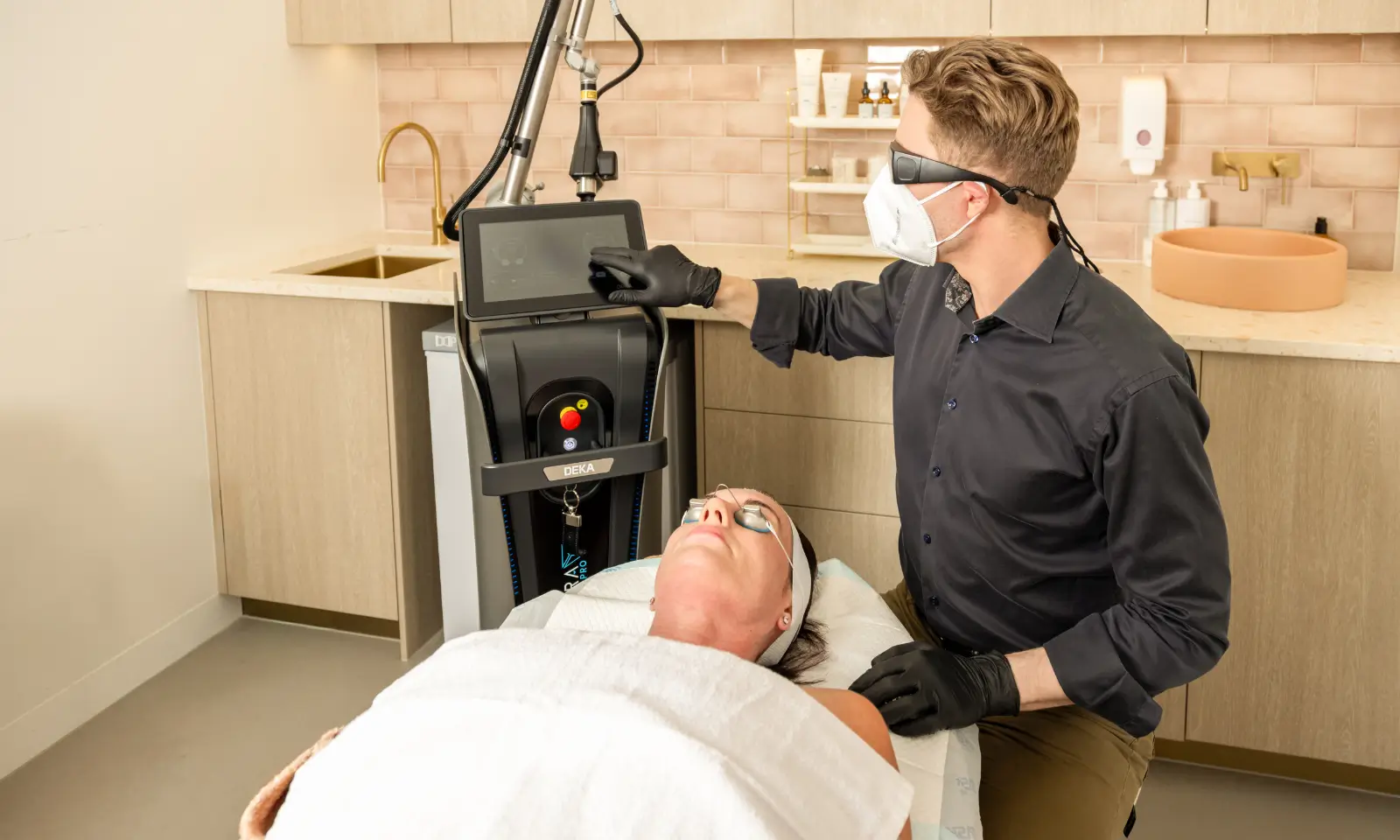
Differences between Fraxel laser vs CO2 usually lie in depth, downtime, and pigment risk. There are also differences in treatment approach, sessions, recovery, and suitability.
Fraxel is often less intensive than CO2. This depends on the device and settings. CO2 often works deeper in the skin. Recovery may take longer.
“Fraxel” is a device name. CO2 refers to a type of laser. The device, settings, treatment area, and person’s skin can all change the comparison.
People often compare them for acne scars, uneven texture, pigment, sun damage, or lines. The more intensive option isn’t always the more suitable one.
This article explains the broad differences between Fraxel and CO2 laser treatments. It covers depth, recovery, risks, and treatment suitability.
This information is general only. It doesn’t replace medical advice.
Main differences between Fraxel laser vs CO2
Here’s the broad comparison.
Depth: Fraxel is often less intensive, depending on the device and settings. CO2 laser resurfacing is often deeper and more intensive.
Downtime: Fraxel often involves shorter downtime. CO2 often involves longer recovery, especially with deeper resurfacing.
Recovery: Fraxel recovery may include redness, swelling, dryness, peeling, or sensitivity. CO2 recovery may include redness, swelling, crusting, discomfort, and longer healing.
Treatment approach: Fraxel treats small columns of skin in a fractional pattern. CO2 can be more intensive. This depends on the settings used.
Sessions: Some Fraxel plans may involve a series of treatments. Some CO2 plans may involve fewer stages, but recovery may be longer. This varies.
Pigment risk: Both treatments can cause pigment darkening or lightening. This risk may be higher with deeper treatment or in skin that marks easily.
Suitability: Both need assessment first. Skin type, pigment risk, medical history, treatment area, and recovery time all matter.
The laser name doesn’t tell the whole story. A lighter CO2 treatment may not be the same as a deeper CO2 treatment. A Fraxel treatment can also vary depending on the device and settings.
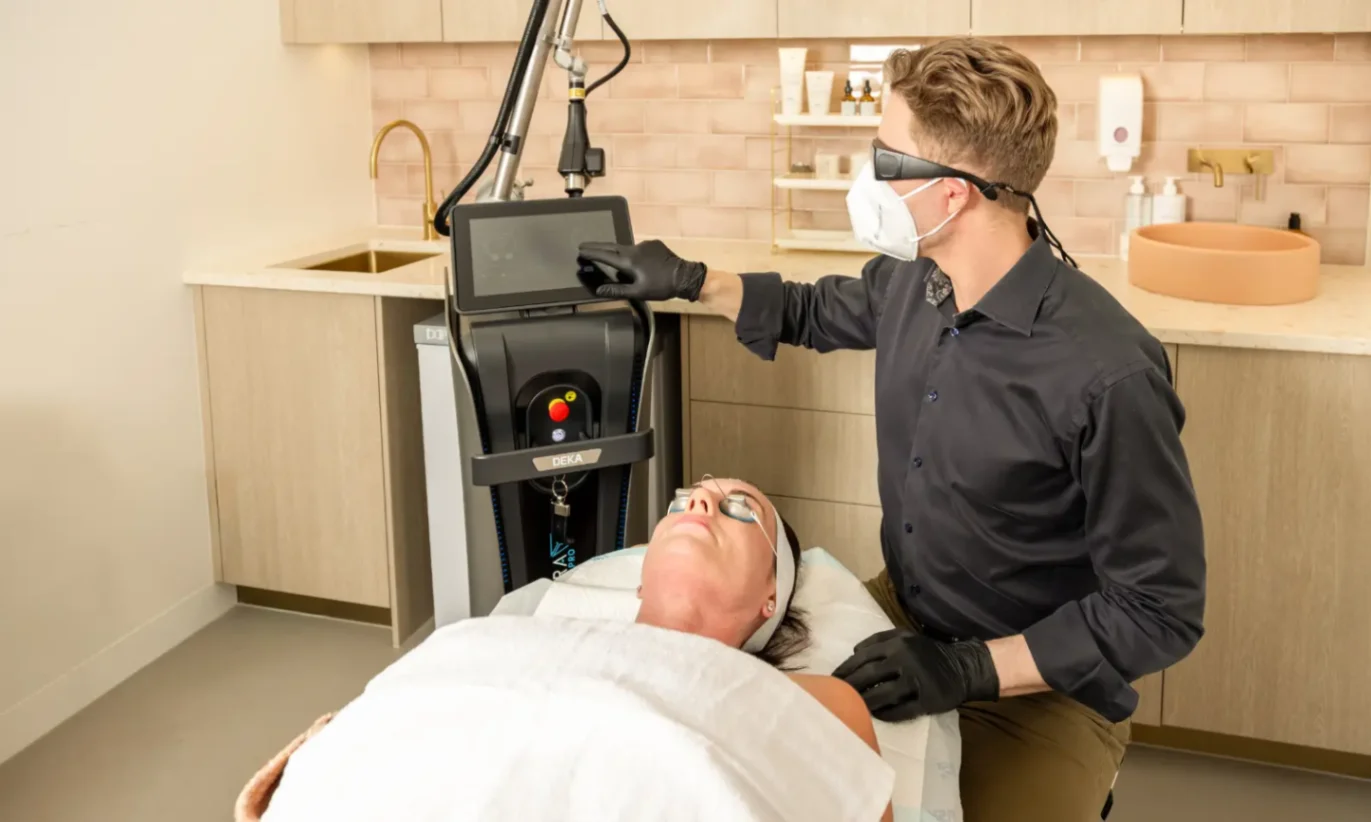
How Fraxel and CO2 may differ by concern
Fraxel and CO2 can be compared by the concern being treated. They should also be compared by recovery time, pigment risk, and how much aftercare is realistic.
Acne scarring
For acne scarring, Fraxel and CO2 usually differ in treatment intensity and recovery.
Fraxel may come up when the concern includes texture changes or selected acne scars. CO2 may be discussed when deeper treatment is being considered. This may happen when deeper texture concerns are part of the assessment.
The suitable option depends on the type of acne scars. Skin type, pigment risk, healing history, active acne, and downtime tolerance also matter.
Laser resurfacing may only be one part of a broader plan. Some people may need active acne managed first. Others may need a staged plan or a different acne scar approach.
Pigmentation and sun-related changes
For pigmentation and sun-related skin changes, both Fraxel and CO2 may be considered. They still differ in intensity, recovery, and pigment risk.
Fraxel may come up for tone, pigment, texture, or sun-related changes.
CO2 laser resurfacing may be discussed when broader resurfacing is being planned. It may involve longer downtime and a higher risk of pigment change for some people.
Pigment concerns can have different causes. Brown marks after acne, sun-related pigment, melasma, and uneven tone aren’t the same.
Laser and light-based treatments can sometimes make pigment darker. The pigment pattern should be checked before treatment is considered.
Lines and skin texture
Fraxel and CO2 may both be discussed when lines and texture are being reviewed.
Fraxel may come up when a less intensive option is being considered. This may suit some people better when shorter recovery is preferred.
CO2 may be an option when deeper resurfacing is being considered. This can mean more visible recovery and closer aftercare.
More intensive treatment can also mean higher risk for some people. A less intensive option can still carry risks and may not suit every concern.
Downtime and recovery
Recovery is one of the main reasons people compare Fraxel laser vs CO2.
Fraxel often has a shorter recovery than CO2. Recovery can still vary. It depends on the device, settings, treatment area, and how the skin responds.
CO2 recovery can be longer, especially with deeper resurfacing. Redness, swelling, crusting, discomfort, peeling, sensitivity, and longer healing may occur.
Recovery planning should include work, exercise, social plans, sun exposure, skincare, and aftercare.
Poor aftercare can increase the risk of irritation, infection, delayed healing, or pigment change.
Can Fraxel and CO2 be used in staged plans?
Some treatment plans may involve Fraxel and CO2 laser resurfacing at different stages.
This depends on the person’s concerns, treatment goals, and response to earlier treatment.
It doesn’t mean the treatments should be combined or performed in sequence for everyone.
A staged plan may be considered when more than one concern is being reviewed over time. Some people may be better suited to skincare or medical care. Others may be better suited to another treatment or no treatment.
The plan should be reviewed as the skin heals and responds.
Risks and when laser resurfacing may need to wait
Both Fraxel and CO2 laser resurfacing can cause temporary effects as the skin heals.
These may include redness, swelling, warmth, tenderness, dryness, peeling, sensitivity, or itching. How long these last can vary.
CO2 is often more intensive. Recovery may be more visible and may last longer. This still depends on the device, settings, area treated, and the person’s skin.
Less common complications may include infection, burns, scarring, delayed healing, or pigment changes.
Some people may be more prone to pigment changes. This may include people who have had dark marks after inflammation. Recent sun exposure or skin that marks easily may also increase risk.
Risk is influenced by more than the laser itself. Skin type and medical history can affect recovery. Medicines, recent tanning, skincare products, healing history, and aftercare can also matter.
Laser resurfacing may need to wait if the skin is irritated, inflamed, or infected. It may also need to wait after recent sun exposure or recent skin treatment.
Some people may need extra care. This includes people who have had keloid scars, slow healing, or certain medical conditions. Pregnancy or breastfeeding may also affect suitability.
It may also help to read guidance on risks and complications of laser treatment.
A clinician should explain the risks before treatment starts. They should explain recovery and aftercare. They should also discuss other options and no treatment.
Questions to ask before Fraxel or CO2 laser
Before Fraxel or CO2 laser treatment, it may help to ask:
- What laser device is being considered?
- Is it ablative or non-ablative?
- How deep will the treatment go?
- What concern is being treated?
- What are the risks for my skin type?
- How much downtime should I expect?
- What aftercare will I need?
- Could pigment darken or lighten?
- Are there other options?
- What could happen if I don’t treat the area?
A consultation should give you time to understand the treatment. It should also cover risks, limits, recovery, and aftercare.
How laser suitability may be assessed at Ascension
At Ascension Cosmetic Medicine, laser suitability may be discussed during consultation before any resurfacing option is considered.
The clinician may assess the concern and skin type. They may also review pigment risk, healing history, past treatment, and current skincare.
They may ask about past procedures and sun exposure. Medical history, medicines, and recovery time may be discussed too.
Photos or skin imaging may be used to document the skin before treatment is planned.
The aim is to understand what’s being treated before any laser option is discussed in detail.
Disclaimer
This article is general information only. It doesn’t replace medical advice, diagnosis, or treatment.
Fraxel laser and CO2 laser treatments may not be suitable for everyone. Results, risks, recovery, and side effects can vary.
A qualified health professional should assess your skin first. They should explain the possible benefits, risks, limits, aftercare, and other options. They should also discuss what may happen if no treatment is done.
Reviewed by Dr Scott Allison (MED0001664087), Registered Medical Practitioner, specialist registration in General Practice.
Dr Scott Allison is a qualified health professional at Ascension Cosmetic Medicine. He consults on skin concerns, treatment suitability, risks, and available options.

