


 Call Us
 Email Us
 Book a time



Our experience treating a jawline
Changes to the jawline can occur naturally or develop over time due to ageing, genetics, or a loss of structural support in the lower face. As skin firmness and the position of fat pads change over time, the jawline can appear less defined. Factors like weight fluctuations and collagen decline can further emphasise this change.
Sharing his techniques with other doctors and nurses, Dr. Scott Allison attends domestic and international conferences. Our team at Ascension are trained by Dr. Allison, using patient-tailored techniques to maintain a high level of care.

Dr Scott Allison
MBBS, BSC, MSC, MPH, FRACGP, FCPCA
Areas of concern
Multiple factors can contribute to a weak jawline, and it is crucial for your practitioner to thoroughly evaluate the underlying cause to determine the most suitable treatment for you. During your consultation, we work with you to understand your facial anatomy and unique aesthetic needs and goals. A personalised treatment plan will then be developed based on your goals.
Jawline size and shape
The size and strength of the jaw can be supported from the outer jaw under the ear, through to the side of the jaw and chin to create definition and prominence.
Changes to the jawline over time
Over time, the jaw can lose bone density and the position of the fat pads can change. Skin tightening treatments may help with the appearance of skin laxity and the definition of the lower face.
Pixie Ear after a facelift
There can sometimes be a deformity near the ear following a facelift procedure known as ‘pixie ear’. During your consultation we can discuss whether non-invasive treatments may help with the appearance of the surrounding skin, and refer you to a plastic surgeon where surgical revision is the more appropriate option.
Your consultation at our Brisbane clinic
During your initial consultation, various aspects will be discussed to ensure a comprehensive understanding of the procedure and your specific needs. The consultation allows us to discuss expectations openly and create a treatment plan you can approve.
Firstly, your cosmetic concerns and treatment goals will be discussed. We will listen attentively to gain insight into what you hope to achieve through treating your jawline concerns. This discussion allows us to explain what can be realistically achieved.
Next, we will thoroughly examine your facial features, asking about the areas of your face where you have concerns regarding jawline size and shape. We will carefully evaluate your facial anatomy, taking note of bone structure, fat pads and skin laxity. This assessment helps us to determine the appropriate treatment plan required. We may also inquire about any allergies or previous cosmetic treatments. This information is crucial for determining your eligibility for the procedure.
The consultation will also involve a discussion about the procedure itself, including the recommended treatments, the expected duration of the results, and any potential risks or side effects. We can explain the technique involved, ensuring you understand the process and know what to expect during and after the treatment.
Finally, the financial aspect will be discussed. We will provide information about the cost of the treatment, any potential additional expenses, and the expected longevity of the results. We can also discuss the option of follow-up treatments and maintenance. Your treatment costs will depend on the personalised details of your procedure, so it is best to wait until having your consultation before making calculations.
Clinical PathwaysAnd Recommendations
Recommended treatments
At Ascension, we provide comprehensive cosmetic consultations, where your comfort, aesthetic preferences, facial anatomy and skin health are all considered to provide a treatment plan tailored to your needs. You may benefit from a combination approach utilising different treatment methods and a number of sessions, which we will discuss during your consultation.
Wonderface
WonderFace is a non-invasive facial toning treatment that combines neuromuscular stimulation with radiofrequency (RF) technology to work both the skin and the underlying facial muscles. Neuromuscular stimulation works the facial muscles, while RF technology supports collagen and elastin in the skin. Individual results vary and are discussed during your consultation.
There is no recovery time after a Wonderface session and results can be seen immediately with ongoing improvements.
Ultraformer MPT
Using high-intensity focused ultrasound (HIFU) technology, the Ultraformer MPT contributes to facial lifting, skin tightening and facial contouring. It’s a non-invasive procedure using ultrasound waves to target and breakdown fat cells in the lower third of the face, while also promoting the production of collagen to tighten the skin.
Depending on the amount of facial sagging in the target areas, 2 – 3 sessions of Ultraformer MPT are usually recommended to contour the face. Results can continue to be seen up to six months after the treatment, however you may benefit from maintenance sessions as time goes on.
Facetite
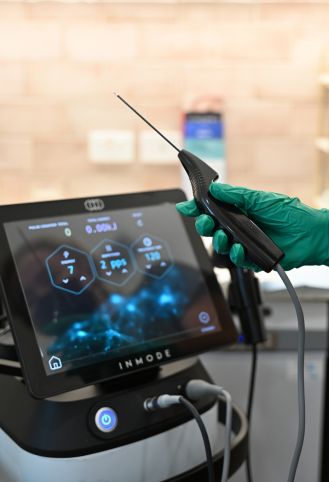
FaceTite uses radiofrequency-assisted liposuction (RFAL), with a few small incisions. The treatment can remove unwanted fat while simultaneously stimulating collagen and elastin production, prompting the skin to tighten.
The treatment can be a suitable alternative to a traditional facelift, using fewer incisions. FaceTite can treat areas of the lower face, including the cheeks, jawline and chin. Since the treatment does require incisions, downtime can include some swelling and bruising, but your personalised aftercare instructions will help you support your body’s healing process.


