


 Call Us
 Email Us
 Book a time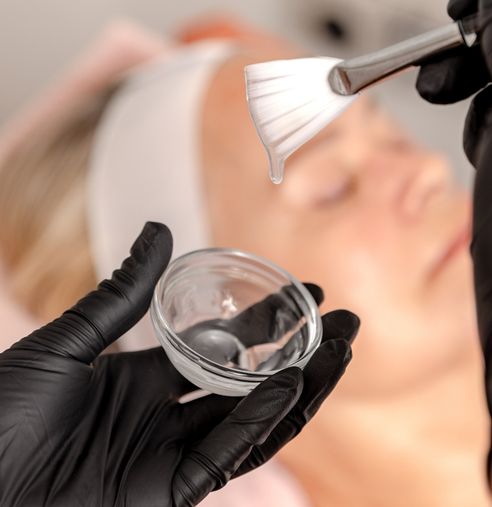
Our experience with clinical skin peel treatments
Different peel formulations work through distinct mechanisms, and the right choice depends on a range of factors including skin type, skin concern, sensitivity, and any concurrent treatments being undertaken. Peels can be used as a standalone treatment or incorporated into a broader treatment plan, depending on what is clinically appropriate for the individual.
When treatments are combined, the approach is determined by clinical assessment rather than a standard package. Our team will advise on whether combining a chemical peel with other treatments is appropriate for your skin, and how the treatment plan may be structured over time.
“Skin peels are one of the most versatile tools in clinical skin care, precisely because there is no single formulation that suits everyone. The selection of a peel, its active ingredients, concentration, and application is determined after examining the skin and understanding what the patient is hoping to address.” – Dr. Scott Allison

Dr Scott Allison
Benefits of Skin Peels
RESULTS
Many patients notice an improvement in the appearance of the skin. During your consultation, we’ll tailor a treatment plan to suit your skin concerns, and this will usually involve at least four peel sessions. A series of treatments can support longer-lasting results, with results that vary between individuals.
TREATS A VARIETY OF SKIN CONCERNS
Skin peels can help with a range of skin concerns, from fine lines and pigmentation to acne and scarring. The peel ingredients chemically exfoliate the top layer of skin, supporting the appearance of refreshed surface skin. Peels can be used together or alone, so no matter what your skin concern is, our peels can be tailored to your skin.
What areas can be treated?
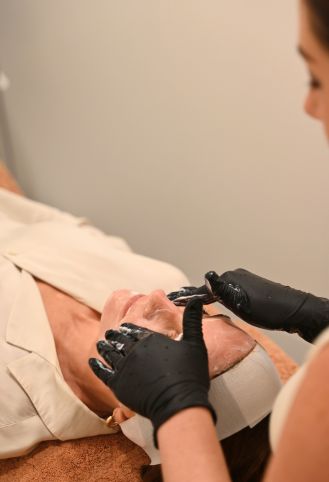
Peels can be used to treat the face, neck & décolletage in both men & women.
Which are more effective peels or lasers?
Both have completely different technology and, on some occasions, can be paired in a treatment plan together or can be used as a standalone treatment. It is best to book an appointment with our dermal therapist to decide which treatment is best suited for you.
What does the treatment feel like?
Generally, you will feel a mild to advanced tingling as well as heat in the area. The treatment is generally comfortable.
Pricing
Pricing for our bespoke peels varies based on individual needs. Prices start at $340.
Different Skin Peel Options
LACTIC ACID PEEL
Lactic acid is a mild Alpha Hydroxy Acid (AHA) that promotes gentle exfoliation of the superficial epidermis, supporting surface texture and improvement in skin clarity. Due to its humectant properties, lactic acid assists in maintaining moisture levels within the skin, making it a suitable option for drier or more sensitive skin types. Treatment recommendations are made following individual clinical assessment.
MANDELIC ACID PEEL
Mandelic acid is an Alpha Hydroxy Acid (AHA) with a larger molecular size, resulting in slower penetration and a reduced risk of irritation compared to other AHAs. It provides gentle exfoliation of the epidermis while assisting in the improvement of uneven skin tone and texture. Mandelic acid also exhibits antibacterial properties, which may make it a suitable consideration for patients with acne-prone or sensitive skin, as assessed in consultation.
SALICYLIC ACID PEEL
Salicylic acid is a Beta Hydroxy Acid (BHA) with oil-soluble properties, allowing deeper penetration into the skin. This may support a reduction of congestion by assisting in the breakdown of sebum and debris within pores. Salicylic acid promotes cell turnover, supporting controlled exfoliation and improvement in skin clarity. Suitability for this peel is determined through individual clinical assessment.
MODIFIED JESSNER PEEL
The modified Jessner peel is a combination chemical peel formulation containing lactic acid, salicylic acid, and citric acid. This peel enhances epidermal exfoliation and promotes cell turnover. It is used to address concerns including pigmentation, acne, and textural irregularities. Depth of effect is influenced by application technique and individual patient skin characteristics, and is discussed as part of consultation.


