


 Call Us
 Email Us
 Book a time
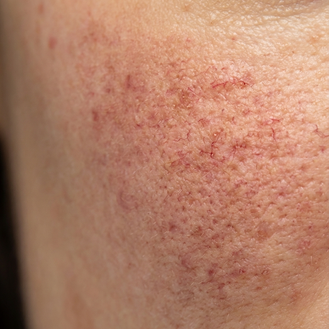
Many people notice redness, flushing, or skin sensitivity long before they know what is causing it. It may come and go, react to heat or skincare, or be dismissed as “just sensitive skin.”
In some cases, this type of skin behaviour may be associated with Rosacea. For those trying to understand what is Rosacea, it is often mistaken for acne, sensitivity, or environmental irritation.
Because these changes can overlap with other skin concerns, understanding how Rosacea may present can help inform clinical assessment.
What is Rosacea?
Rosacea is a chronic inflammatory skin condition that most often affects the central face. It may involve flushing, ongoing redness, visible blood vessels, or acne-like bumps.
It most commonly develops in adults over 30 and can fluctuate over time, with periods where symptoms become more noticeable and periods where they settle.
Rosacea is different from short-term redness caused by irritation or environmental factors. Temporary redness may settle once the trigger is removed, while changes associated with Rosacea may persist or recur over time.
The exact cause is not fully understood. Contributing factors may include:
- vascular sensitivity
- immune system response
- skin barrier dysfunction
- environmental and lifestyle triggers
Rosacea is not contagious. It is also not caused by poor hygiene.

How common is Rosacea in Australia?
Rosacea is considered a relatively common skin condition, particularly in fair-skinned populations.
Estimates suggest that a proportion of adults may experience features associated with Rosacea, although many cases are not formally diagnosed. In Australia, factors such as UV exposure and climate may influence how symptoms appear.
Recognising these patterns may help inform clinical assessment.
How does Rosacea present on the skin?
Rosacea does not appear the same for everyone. It may present in several ways, and these features can overlap.
Facial redness and flushing
- redness across the cheeks, nose, chin, or forehead
- flushing that may be triggered by heat, stress, alcohol, or certain foods
Visible blood vessels
- fine visible vessels on the skin surface, known as telangiectasia
Inflammatory breakouts
- red bumps or pustules that can resemble acne, usually without blackheads
Skin sensitivity
- burning, stinging, or reactive skin
- sensitivity to skincare products
Ocular involvement
- dry, irritated, or watery eyes
- redness around the eyelids
In some cases, skin thickening may occur, particularly around the nose, although this is less common.
Is it Rosacea or Sensitive Skin?
This is a common area of confusion because both can involve redness, stinging, or reactivity.
Rosacea may be considered where redness persists or returns often, particularly when visible blood vessels or frequent flushing are also present. Some people may also notice flare-ups that come and go.
Sensitive skin can feel reactive, but it does not usually involve ongoing visible blood vessel changes.
How is Rosacea assessed?
There is no single test for Rosacea. Assessment is usually based on a clinical review of the skin, symptoms, history, and possible triggers by a Dermatologist.
Assessment may also involve discussing how long symptoms have been present, what appears to trigger changes, and how the skin has responded to previous products or treatments. This helps provide additional clinical context regarding possible contributing factors.
In some cases, similar skin conditions may need to be considered. This is why assessment is based on a combination of visible features and history, rather than a single factor.
Assessment by a qualified medical practitioner may be considered if you notice:
- redness that persists or returns often
- frequent flushing
- acne-like breakouts that do not respond as expected
- skin that feels persistently reactive, warm, or inflamed
These features can overlap with other skin concerns. Assessment can help clarify whether Rosacea or another factor may be contributing to the changes.
What can trigger Rosacea?
Rosacea triggers can vary between individuals. Commonly reported triggers include:
- sun exposure
- heat and temperature changes
- alcohol
- spicy foods
- stress
- certain skincare ingredients
Not everyone will react to the same triggers.
Triggers do not always have an immediate effect. Changes may appear later or build gradually over time, which can make patterns less obvious.
Observing when flare-ups occur alongside environmental exposure, daily activities, or product use may provide useful context during clinical assessment.
When to monitor changes in your skin
Skin changes do not always follow a clear pattern. Redness, flushing, or sensitivity may appear gradually or come and go over time.
Some people may not notice these changes immediately, especially when they are mild or intermittent. In other cases, changes may become more noticeable in certain environments or situations.
Paying attention to when symptoms appear, how long they last, and what may be happening at the time can help provide useful context. This information may help support discussion during clinical assessment.
Is Rosacea curable?
Rosacea is considered a chronic condition. This means it cannot currently be cured, but symptoms may be managed over time.
Management usually focuses on reducing triggers where possible, supporting the skin barrier, and addressing symptoms such as redness, flushing, sensitivity, or breakouts.
The approach can vary depending on how Rosacea presents, how often flare-ups occur, and how the skin responds to treatment or skincare changes.
Ongoing review may be needed, as symptoms can change over time.
Ways Rosacea may be managed
Rosacea management is usually personalised to the individual. No single approach is suitable for everyone.
1. Skincare and barrier support
A simplified skincare routine may be considered as part of supporting the skin barrier.
This may include:
- gentle cleansers
- ingredient selection based on skin tolerance
- daily sun protection
Product selection should be approached carefully, as some ingredients may increase sensitivity.

2. Vascular laser treatments
Vascular lasers may be used in some cases where visible blood vessels or background redness are present.
These treatments may be discussed as part of a broader management plan. Multiple sessions may be required, and responses vary between individuals.
3. Energy-based laser procedures
Laser Genesis is an energy-based procedure that may be considered in some cases as part of an overall management plan.
These procedures use energy delivered to the skin in a controlled clinical setting, and may be discussed where certain skin features are present. Suitability depends on individual assessment.

4. Energy-based devices
Some energy-based devices may be considered in cases where multiple skin features are being assessed.
These options are not suitable for everyone and require careful clinical assessment.
5. Lifestyle and trigger management
Long-term management may also involve identifying personal triggers and reviewing daily factors that appear to influence the skin.
This may include:
- sun exposure
- heat
- alcohol
- stress
- skincare products
Not all triggers apply to everyone, and patterns may vary.
In some cases, different approaches may be introduced gradually rather than all at once. This allows the skin to be monitored more closely and allows the skin response to be reviewed progressively over time.
How Rosacea management is approached at Ascension
At Ascension Cosmetic Medicine, Rosacea is assessed and managed as a chronic inflammatory skin condition.
Management begins with a consultation, where factors such as skin presentation, severity, possible triggers, previous treatments, and skin sensitivity are reviewed.
Depending on assessment findings, different management approaches may be discussed. It may include skincare guidance, in-clinic procedures, trigger management, or ongoing review.
Recommendations are guided by clinical assessment, suitability, and risk considerations. All procedures are performed or overseen by qualified health practitioners.

These images are shared with the patient’s explicit consent and are intended for use on Ascension’s official channels only. Redistribution or reuse by third parties is not permitted.
Clinical images are used for educational purposes and reflect one individual presentation at a specific point in time. Variability in skin presentation, management approach, and individual response means outcomes differ between patients.
Understanding expectations
Managing Rosacea often involves ongoing review and adjustment over time.
Responses can vary between individuals based on factors such as skin characteristics, triggers, and how the condition presents.
Changes may not occur in a linear way, and periods of fluctuation can be part of the condition.
If you are experiencing persistent redness, sensitivity, or changes in your skin, these may be discussed as part of a professional assessment.
Observing how the skin changes over time may provide useful clinical context during consultation.
Management approaches may also be adjusted over time. This allows changes in the skin to be monitored and supports ongoing clinical review based on how the skin changes over time.

These images are shared with the patient’s explicit consent and are intended for use on Ascension’s official channels only. Redistribution or reuse by third parties is not permitted.
Images shown reflect outcomes at a specific point in time following treatment, which in this case involved a combination of treatments performed over time. Individual responses vary, and outcomes are not guaranteed.
Assessment and consultation
If persistent redness, flushing, or skin sensitivity is present, assessment by a qualified health practitioner may help clarify possible contributing factors.
At Ascension Cosmetic Medicine, any recommendations are made following a thorough medical assessment.
Disclaimer
This article is for educational purposes only and does not constitute medical advice. All treatments carry risks and may not be suitable for everyone. Individual responses vary. A consultation with a qualified health practitioner is required to determine appropriate options.

