


 Call Us
 Email Us
 Book a time
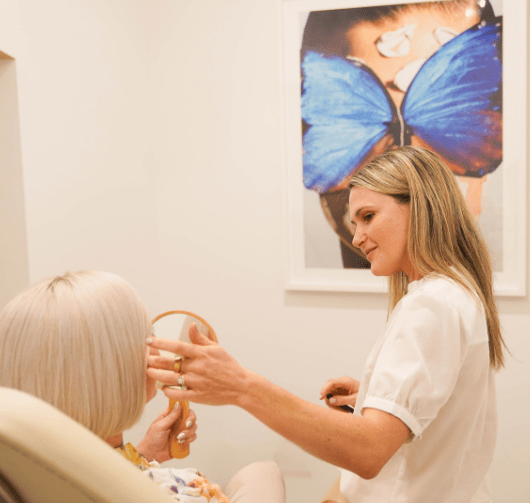
You might start paying closer attention to your skin in certain lighting.
Some areas may stand out more than others.
Most people don’t begin by asking about CO2 laser.
The conversation usually starts during a consultation, when skin concerns are discussed more broadly.
CO2 laser may be introduced as one of several options.
This usually happens when a practitioner is assessing more established or complex concerns.
This is not a casual or a low-commitment treatment.
It involves proper assessment, planning, and time for recovery.
Before getting into how it works, it helps to understand what it actually is and how it’s used in practice.
What is CO2 laser resurfacing?
CO2 stands for carbon dioxide. In cosmetic medicine, it refers to a type of ablative laser used in clinical settings.
It delivers controlled energy to the skin, which affects both the surface and deeper layers.
You can think of it as a treatment that works in two ways at once.
It removes portions of the outer skin, while also heating the layers underneath.
This is part of how the skin responds over time.
Most modern devices use what’s called fractional technology.
The laser is applied in a grid-like pattern, so only small sections of skin are treated at a time.
The surrounding skin is left untouched between treated areas.
Due to the way the laser affects the skin, CO2 laser is usually considered within a broader treatment plan.
A clinician will assess suitability based on factors such as skin type, medical history, and the nature of the concern.

What does CO2 laser address
CO2 laser resurfacing may be discussed during consultation when people bring up certain skin concerns.
These are often concerns that involve differences in skin texture or visible irregularities on the surface
A clinician may consider it in cases such as:
- acne scarring
- surgical scars
- sun-related skin concerns or uneven pigmentation
- fine lines and deeper-set lines
- mild to moderate skin laxity
- uneven texture
- enlarged pores
Each of these concerns can present differently from person to person.
For example, acne scarring can vary in depth and shape, while pigmentation may sit at different levels within the skin.
This means it creates controlled areas of impact on the skin by removing portions of the outer layer and delivering controlled heat into deeper layers.
The effects on the skin can vary depending on the type of concern being assessed.
This is why treatment planning is not standardised and is based on clinical evaluation.
CO2 laser for acne scars
Acne scarring is one of the concerns that may be discussed in relation to CO2 laser.
Acne scarring often involves differences beneath the surface of the skin.
Fractional CO2 laser is sometimes considered when assessing acne scarring because of how these scars sit within the skin.
Some scars create uneven surfaces, while others form deeper indentations.
The treatment approach depends on how these scars present.
In some cases, multiple sessions may be discussed, or alternative options may be considered as part of a broader plan.
Not all acne scars are suited to the same approach.
This is why assessment focuses on scar type, skin type, and how the skin presents over time.
Who is CO2 laser for?
Not everyone who asks about CO2 laser will be suitable for this treatment.
Some people come in with different expectations around treatment and recovery time.
While others are already aware that this type of treatment may involve planning and a period of downtime.
It often comes down to how the skin presents, their comfort with the recovery period, and whether the treatment fits within their broader preferences.
CO2 laser resurfacing may be appropriate for:
- Individuals with visible textural concerns
- Patients who understand and accept downtime
- Those exploring non-surgical treatment options
It may not be suitable for:
- Certain skin types with higher risk of pigmentation changes
- Patients on specific medications
- Individuals whose expectations may not align with clinical advice
- Those unable to commit to strict aftercare
At Ascension, suitability is determined following medical consultation and skin assessment. Treatment recommendations are always individualised.
The CO2 Laser Process: From consultation to aftercare
1. Medical Consultation
Under current Australian regulations, a thorough consultation is required before the treatment. This includes:
- Full medical history
- Skin assessment
- Discussion of risks and what the procedure involves
- Review of alternative options
- Clear explanation of the recovery process
No treatment should proceed without informed consent.
2. Preparation Phase
Patients may be advised to:
- Cease certain skincare products
- Begin skin preparation protocols
- Avoid sun exposure
- Use prescribed topical products where appropriate
Preparation steps vary depending on individual factors and the planned treatment.
3. Treatment Day
CO2 laser resurfacing is performed in a controlled clinical environment.
A topical anaesthetic may be applied. Treatment time varies depending on the area treated.
Because this is an ablative laser, it may include redness, swelling, and a sensation of heat.
4. Recovery and Downtime
Recovery is an expected part of the process following CO2 laser treatment.
The extent and duration can vary depending on the individual and the area treated.
Common post-treatment responses may include:
- redness
- swelling
- oozing or crusting
- peeling
- temporary skin sensitivity
Downtime can vary from person to person.
Some people may require a period away from usual activities while the skin recovers.
Aftercare instructions are provided as part of the treatment process. These may include:
- use of prescribed post-procedure products
- limiting sun exposure
- use of high-SPF sun protection
- gentle cleansing
Following aftercare guidance is part of the overall management of the skin during recovery.
CO2 laser before and after results

Disclaimer: All images are shared with the patient’s explicit consent and are intended solely for use on Ascension’s official channels. Redistribution or reuse by any third party is strictly prohibited. Results are individual and may vary. A personalised consultation is required before treatment to determine suitability. As with all non-surgical cosmetic procedures, there are inherent risks and potential side effects, which differ according to the treatment, products used, and individual factors.
For further details, please visit our website: www.ascension.com.au/risks-and-complications/
Images or examples of CO2 laser treatment are sometimes used to show how the skin can appear at different stages.
It’s important to understand that these examples are not consistent or predictable across individuals.
Outcomes can vary based on several factors, including age, skin type, the nature of the concern being assessed, the number of treatments performed, and how aftercare instructions are followed.
General health and lifestyle factors may also play a role in how the skin presents over time.
Because of this variation, visual comparisons should be viewed with caution.
They do not represent guaranteed or uniform changes.
A personalised consultation is required to assess the skin and determine what approach may be considered appropriate.
CO2 side effects and risks
CO2 laser resurfacing is a medical procedure, so it comes with a range of possible side effects that should be understood before making a decision.
These can vary depending on the individual, the treatment area, and how the skin presents during recovery
Some people may experience redness, swelling, or increased sensitivity in the skin.
In other cases, there may be changes in pigmentation, delayed healing, or signs of infection.
Scarring is also a known risk, although it is not common.
For this reason, consideration is given not only to the treatment itself, but also to whether it is appropriate in the first place.
This includes reviewing medical history, identifying potential risk factors, and assessing the ability to follow aftercare instructions.
Clear information should be provided before proceeding, including what the risks are and how they are discussed in a clinical setting.
CO2 laser cost in Australia
The cost of CO2 laser treatment can vary, and there isn’t a single fixed price that applies to everyone.
It usually depends on factors such as the size of the area being treated, the type of concern being assessed, and how many sessions are being considered.
Other variables, such as the clinical setting and the experience of the practitioner, may also influence pricing.
Because of this, cost is typically discussed after the skin has been assessed and a treatment plan has been outlined.
This allows the approach to be based on individual factors rather than a standard package or set structure.
The Ascension approach to CO2 laser treatment
When people look into CO2 laser, the treatment itself is often what people focus on.
But in practice, much of the time is spent determining whether it should be performed at all.
At Ascension Cosmetic Medicine, that process is kept structured.
The consultation is used to understand how the skin presents, what concerns are being raised, and whether this type of treatment fits within that context.
This includes taking a full medical history, assessing the skin, and outlining what the procedure involves, including downtime and aftercare.
In some cases, CO2 laser may be considered. In others, different options may be discussed.
The aim is to keep the process clear and measured, without pressure to proceed.
This supports informed decision-making based on individual preferences.
A complete guide to CO2: Making an informed decision
By the time CO2 laser is being considered, some people may have explored other options or managed their skin concerns in different ways.
This may not be the first option discussed, but one of several that can come up during consultation.
It involves more than the procedure itself.
There is preparation beforehand, a recovery period, and aftercare instructions that need to be followed.
Because of this, the decision to proceed can vary from person to person.
It depends on how the skin presents and whether the treatment aligns with individual preferences.
If CO2 laser is being considered, a consultation is required to assess suitability and discuss available options.
Disclaimer
This information is provided for educational purposes only and does not replace a personalised medical consultation. Suitability for CO2 laser treatment must be assessed by a qualified health practitioner. Individual results vary. All medical procedures carry risks and potential complications.

