


 Call Us
 Email Us
 Book a time
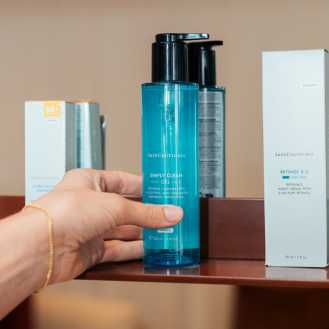
Dull or uneven skin tone is a common concern. It can be influenced by factors including stress, sleep, diet, environmental exposure, and the natural slowing of skin cell turnover over time. This blog outlines seven skincare approaches — from daily skincare habits to professional treatment options — that may support skin appearance over time.
1. Exfoliate appropriately to treat uneven skin texture
When dead cells pile up, skin renewal slows down, and this can lead to an uneven skin appearance.
Rough scrubs may feel satisfying, but they can cause tiny tears and inflamed patches that make dullness worse.
Chemical exfoliants break the bonds between cells, so you do not need to scrub.
There are two main types you should know:
Alpha hydroxy acids or AHAs, like glycolic acid or lactic acid, work on the top layer to remove surface buildup. They suit dry or combination skin that needs a gentle polish.
Beta hydroxy acids or BHAs, like salicylic acid, penetrate pores to clear oil and debris. They fit oily or acne-prone skin that needs deeper cleaning.
If you are not sure which one to pick, start with a low concentration AHA and switch to BHA later if breakouts or extra oil are your main concern.
Avoid exfoliating on broken or inflamed skin, skip acids after shaving, and never layer them with retinoids on the same day.
Always follow with a moisturiser and then a broad-spectrum sunscreen.
How to start
- Use an exfoliant once per week at 5 to 10 percent concentration
- Apply on clean, dry skin and rinse after one minute
- If tingling or redness appears, pause for one week
- When your skin adjusts, add a second session, up to three per week
2. Use vitamin C every morning
Vitamin C has several properties relevant to skin appearance: it may help support collagen production and provide some protection against environmental damage. It may also support the effectiveness of sunscreen against UV-related damage over time.
Look for a serum listing L-ascorbic acid at ten to twenty percent strength. Concentrations above twenty percent are associated with increased irritation without proportional additional benefit. Store the product away from heat and light — oxidised vitamin C (indicated by a brown colour) has degraded and is less effective.
A mild tingle on application can occur, particularly when first using the product. A strong burning sensation suggests the concentration may be too high; consider switching to a lower concentration or a derivative such as magnesium ascorbyl phosphate.
How to apply
- Cleanse and pat your skin fully dry
- Place two to three drops on your fingertips
- Press the serum into face and neck areas
- Let it absorb for one to two minutes
- Follow with moisturiser and broad-spectrum SPF
Consistent daily use over at least four weeks is generally needed before changes in tone or pigmentation may become noticeable.
3. Hydrating masks for moisture
Even otherwise healthy skin can appear dull when it lacks adequate hydration.
A hydrating mask may temporarily add moisture to the top layer of skin and improve the appearance of fine lines. Sheet masks containing humectants may draw water back into the skin’s surface.
Gel or overnight masks containing ingredients such as glycerin or aloe vera can support overnight hydration. Using masks one to two times per week is generally appropriate; they are best treated as supplementary rather than daily treatments.
How to use masks
- Sheet mask: unfold and place on clean skin, leave for at most half an hour, peel off and pat in excess serum
- Gel mask: apply a thin layer before bed, leave on overnight, rinse or gently wipe off in the morning
4. Niacinamide at night
Niacinamide (vitamin B3) supports the skin barrier and may help address redness, improve pore appearance, and improve overall skin texture without the irritation associated with acid-based actives. It is generally compatible with other skincare ingredients.
Consistent use over three to six weeks is usually recommended. A serum containing five to ten percent niacinamide is appropriate for most skin types; higher concentrations do not provide proportional additional benefit and may cause irritation in sensitive skin.
Apply niacinamide after cleansing and before moisturiser. Evening application is well-suited to this ingredient, particularly if vitamin C is used in the morning.
How to apply
- Cleanse and pat dry
- Dispense two to three drops of niacinamide serum
- Press into face and neck
- Wait one to two minutes before applying moisturizer
5. Sunscreen including indoors
They contribute to collagen breakdown and uneven pigmentation over time, often before visible sunburn occurs.
A broad-spectrum SPF 30 or higher protects against both UVA and UVB radiation. Apply every morning, including when spending time indoors, and reapply every two hours when outdoors or perspiring.
Foundation or tinted moisturiser with SPF alone does not provide adequate sun protection — achieving the labelled SPF requires approximately a teaspoon of product, which is more than most people apply as part of a makeup routine. A dedicated sunscreen applied separately provides reliable protection.
How to apply
- After moisturiser, spread a nickel-sized amount over face and neck
- Reapply every two hours if exposed to sun or heat
6. Cleanse without stripping the skin
A strong barrier holds in moisture and keeps irritants out. A weak barrier may contribute to dryness and dullness, but under-cleansing leaves behind sweat, oil, and pollution that clog pores. A two-step cleanse at night may help address both concerns.
First, use an oil-based balm or micellar water to dissolve makeup and sunscreen.
Then follow with a mild cream or gel cleanser that rinses clean without leaving tightness. In the morning, if you wore only light products or just sweat, a splash of water or a gentle gel cleanser is enough.
Look for cleansers free of sulfates, with a pH between 5 and 6, and supportive ingredients like ceramides or glycerin.
How to cleanse
- Stage one: massage oil balm or micellar water over dry skin, then rinse or wipe off
- Stage two: apply cream or gel cleanser, massage over damp skin, rinse thoroughly
7. Consider professional treatment options

For concerns that do not respond adequately to home-based skincare, a professional treatment may be an option, depending on your individual suitability.
Rejuran a treatment using polynucleotides derived from salmon DNA that may support skin repair, hydration, and fine line appearance. A course of treatment typically involves multiple sessions.
A chemical peel using acids such as glycolic acid or trichloroacetic acid to help resurface uneven tone; some peeling of the skin for several days following treatment is expected.
Microneedling creates controlled micro-channels in the skin to help trigger skin-stimulating effects; some redness following treatment is common and individual recovery varies.
LED red light therapy uses specific light wavelengths to target inflammation and other skin concerns; generally involves multiple sessions.
Each of these treatments carries its own cost, timeline, and side-effect profile, and a qualified practitioner can tailor a plan that fits your skin type and goals.
Putting it together
Supporting skin health over time is generally best achieved through a consistent, simple routine rather than rapid or dramatic interventions. The approaches outlined in this article — appropriate cleansing, regular exfoliation, daily antioxidant and sun protection, and targeted active ingredients — form a reasonable foundation for most skin types.
Professional options such as those listed in section seven may be considered in addition to a home routine, and will be assessed individually during consultation.
Individual results from any skincare approach vary.

