MED0001664087 - This website contains imagery which is only suitable for audiences 18+. All non-surgical procedures contain risks. Read More Here
Our team at Ascension can assess rosacea presentations and discuss available procedure options. Depending on your individual presentation, a single procedure type or combination approach may be considered. Following consultation, an individualised procedure plan will be developed if you are deemed a suitable candidate.
Connect with our team for personalised advice
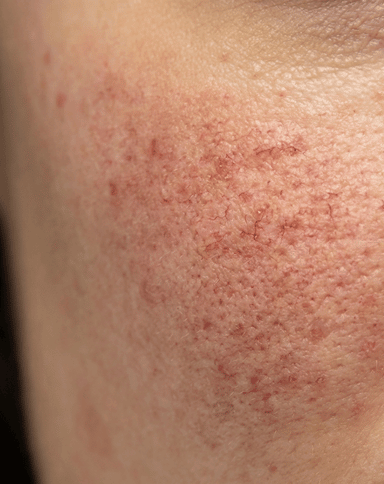

Procedures may help reduce visible signs of rosacea including erythema and telangiectasia. Rosacea is a chronic condition that requires ongoing management; procedures may temporarily improve appearance but do not cure the underlying condition.
Our team will assess your rosacea presentation, subtype, severity, and treatment history to discuss which procedure options, if any, may be appropriate. Not all rosacea presentations respond to procedural interventions.

Following assessment, if you are deemed suitable, an individualised procedure plan will be developed based on your specific rosacea subtype, severity, skin type, and realistic expectations. Multiple sessions are typically required.

Adult Acne & Rosacea Clinic that is led by Dr. Lisa Byrom (Specialist Dermatologist).
Healite II is a medical device that delivers low-level light therapy (LLLT) using red and blue light wavelengths. The therapy may influence inflammatory processes and cellular activity. For rosacea, light therapy may affect visible redness, though individual responses vary significantly. The proposed mechanism involves effects on cellular mitochondria and inflammatory mediators.
Multiple sessions are typically required. The number of sessions depends on individual response, rosacea severity, and subtype.

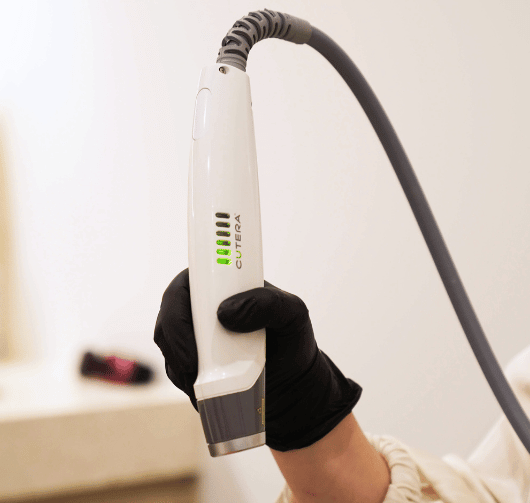
CoolView Laser uses dual wavelengths of 532nm and 1064nm laser energy to target visible blood vessels (telangiectasia) and erythema associated with rosacea. The device delivers controlled light energy that is absorbed by haemoglobin in blood vessels. This absorption may cause thermal coagulation of targeted vessels, aiming to reduce their visibility.
The procedure may also be used to address pigmentation, visible capillaries, and uneven skin tone. Individual responses vary significantly.
The number of sessions required may vary depending on the severity of the condition and the individual's response to treatment.
Laser Genesis uses Nd:YAG laser technology to deliver thermal energy to dermal tissues. The procedure aims to affect collagen remodelling and reduce visible blood vessels contributing to rosacea-associated erythema. During the procedure, patients experience warmth on the skin surface.
Following the procedure, sun protection is essential. Most patients can resume normal activities shortly after treatment, though some redness or sensitivity may occur.
Multiple sessions are typically recommended. The number of sessions required varies based on individual response, rosacea severity, and baseline skin characteristics. A series of 4-6 sessions is common, though individual requirements vary.
At Ascension, we offer non-surgical and minimally invasive cosmetic procedures to address various skin concerns. Dr Scott Allison is the founder and principal physician.
Our clinic includes multiple procedure rooms and a recovery area.
To discuss rosacea management options, consultation is required to assess your individual condition, discuss realistic expectations, review potential risks, and determine which approach is appropriate for your specific case.
Ascension is a non-invasive cosmetic clinic, offering a range of treatment options to patients, based on their individual needs, goals, and professional assessment. Our New Farm clinic has been designed with attention to patient comfort.


Dr. Scott Allison is a Cosmetic Physician and international trainer in non-surgical treatments. Dr Allison provides a range of non-surgical cosmetic treatments with a focus on patient-centred care and appropriate clinical assessment. During a consultation, he discusses your concerns, suitability, expected outcomes, and potential risks, so you can make an informed decision.
A Cosmetic Physician is a medical doctor who has done advanced training in the field of cosmetic medicine. The high standard of medical care they provide is set out by the Cosmetic Physicians College of Australasia.
Connect with our team for personalised advice

A personalised consultation is the best way to determine how many treatments you will require.

170 Merthyr Road, New Farm, QLD
© Copyright 2026 Ascension
