


 Call Us
 Email Us
 Book a time

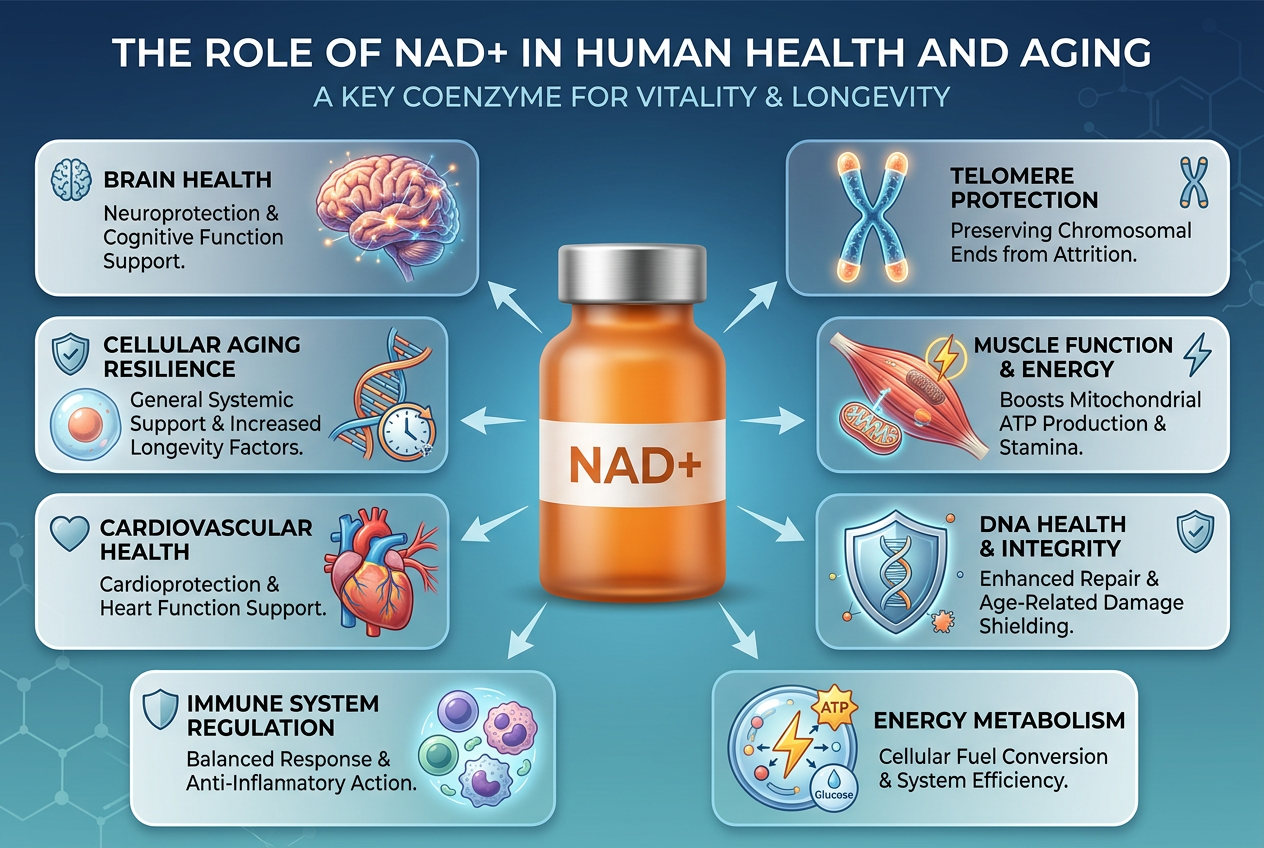
NAD+ (Nicotinamide Adenine Dinucleotide) is a coenzyme found in every living cell. In recent years it has attracted growing scientific interest for its role in cellular energy metabolism, DNA repair, and the biology of ageing. This page provides an overview of what NAD+ is, how it relates to the ageing process, and why it has become a focus of longevity research.
To discuss how this area of science may be relevant to your individual health circumstances, please contact Ascension Cosmetic Medicine to arrange a consultation with Dr Scott Allison.
What is NAD+?
NAD+ is a coenzyme present in all living cells. It plays a central role in two fundamental cellular processes: energy metabolism and DNA repair. Without adequate NAD+, cells cannot efficiently produce the energy required to function and maintain themselves.
NAD+ exists in two functional forms within the cell.
NAD+ (the oxidised form) is the active molecule involved in initiating the chemical reactions that convert nutrients into cellular energy and support DNA repair processes. NADH (the reduced form) is produced when NAD+ gains electrons during metabolic processes, and plays a role in generating ATP — the primary energy currency of the cell.
The term “NAD” is commonly used as a general reference to this family of related molecules, while NAD+ and NADH describe the specific functional states that influence how cells produce energy and maintain themselves.
How NAD+ levels change with age
Research indicates that NAD+ levels in the body decline naturally with age. This decline has been studied in relation to changes in cellular energy production, DNA repair capacity, and a range of biological processes associated with ageing.
Several factors beyond age have been associated with reduced NAD+ levels, including chronic stress, poor dietary habits, physical inactivity, and excessive alcohol consumption.
Lifestyle factors and NAD+ levels
General lifestyle habits have been associated in the scientific literature with changes in NAD+ levels. The following are commonly referenced in this context:
- Diet — Foods containing vitamin B3 (niacin), found in sources including fish, poultry, and whole grains, contribute to the body’s NAD+ precursor supply.
- Physical activity — Regular exercise, including a combination of aerobic and resistance training, has been associated with NAD+ metabolism in research settings.
- Stress management — Chronic stress has been associated with increased cellular demand on NAD+-dependent processes. Stress management approaches including mindfulness practice, yoga, and breathing exercises are relevant general health considerations.
- Alcohol — Excessive alcohol consumption has been associated with reductions in NAD+ availability at the cellular level.

Arranging a consultation
If you are interested in discussing the science of cellular ageing and how it may be relevant to your individual health circumstances, please contact Ascension Cosmetic Medicine to arrange a consultation with Dr Scott Allison.
During a consultation, Dr Allison can discuss your individual health history and circumstances, review the current evidence in this area, and outline what options, if any, may be suitable.

